By Martin Rowinski, CEO of Boardsi and Author of “The Corporate Matchmaker” and “Beyond the Title”
Transitioning from the C-suite to the boardroom isn’t a promotion — it’s a transformation.
Many accomplished executives reach a stage in their careers where they’re ready to expand their influence beyond operational execution. They’ve built companies, led teams, and driven results. Yet when they step into the boardroom, the very traits that made them exceptional operators must evolve into something more strategic, more reflective, and far more consequential.
In the modern governance landscape, the most effective board members aren’t the ones who do more — they’re the ones who think deeper.
1. From Execution to Inquiry
As executives, our instinct is to solve problems. We see challenges, act decisively, and move quickly. But the boardroom demands a different discipline — the discipline of strategic inquiry.
Instead of asking, “How do we fix this?” a board director asks, “Should this even be our focus?”
That shift from doing to discerning separates operational leaders from true governance professionals.
The best boards don’t micromanage; they guide, challenge, and illuminate. They ask the questions that force organizations to pause, rethink, and realign with their long-term vision.
2. The Value of Distance
When you sit on a board, your value isn’t proximity — it’s perspective.
The higher you’ve climbed in your career, the more difficult it can be to step back. But great directors understand that their strength lies in distance from daily operations. That distance allows for clarity. It gives you the ability to see the bigger picture — market dynamics, stakeholder expectations, emerging risks — that those inside the business often can’t.
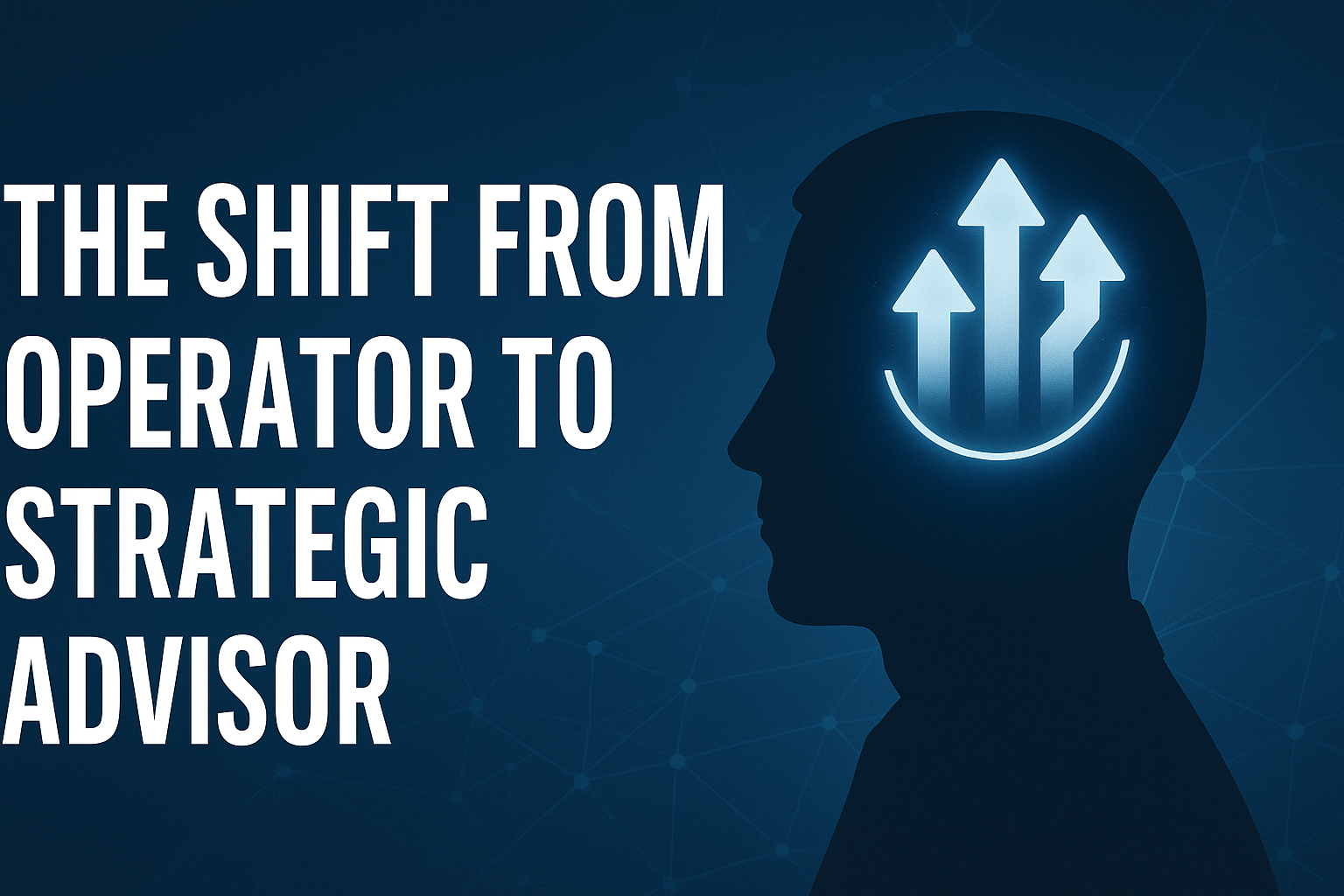
The shift from operator to advisor requires comfort with ambiguity and the humility to influence without control.
3. From Directing People to Shaping Culture
Leadership in the boardroom isn’t about managing teams; it’s about steering culture from the top down.
Boards set the tone for integrity, inclusion, and innovation. Every conversation, every decision, reflects what the organization stands for. I’ve seen boards that focus purely on numbers miss the cultural fractures that later drive those numbers down.
A strategic advisor focuses on alignment: ensuring that purpose, performance, and people are all connected.
4. From Expertise to Wisdom
Executives bring deep expertise — and that’s valuable. But in the boardroom, wisdom trumps expertise.
Wisdom is the ability to balance data with judgment, to listen as much as you speak, and to know when to challenge and when to support.
The best board members are not the loudest or the most experienced in one domain — they’re the most self-aware. They recognize that governance is a team sport, not a solo act.
5. The Power of Strategic Curiosity
I often tell aspiring board members: curiosity is your new superpower.
The most valuable directors never stop learning. They study new technologies, global trends, and regulatory shifts — not because they must, but because they understand that innovation and insight start with curiosity.
A boardroom full of curious minds is a boardroom that stays relevant.
Closing Thought: The Advisor’s Legacy
Becoming a board member isn’t the culmination of a career — it’s the expansion of one’s purpose. It’s where your experience transforms into influence and your leadership becomes legacy.
To move from operator to strategic advisor is to embrace the art of guidance over control, foresight over reaction, and impact over involvement.
That’s the mindset that elevates a good executive into a great director — and it’s the mindset that defines the modern boardroom.