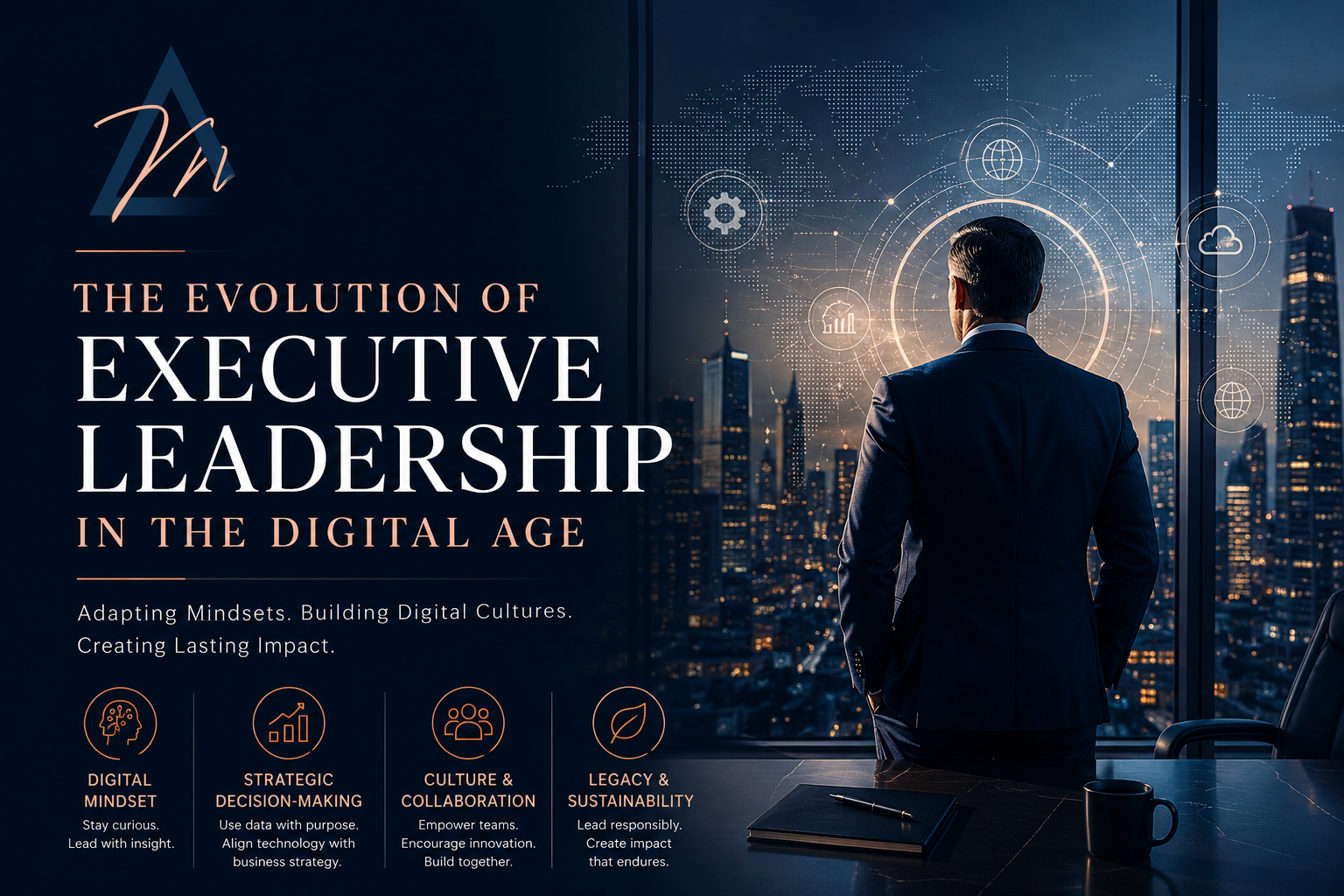
The conversation around digital transformation has matured, but leadership has not always kept pace with it.
Most organizations have invested heavily in technology. They have adopted artificial intelligence, modernized infrastructure, and implemented data-driven systems. Yet many of these same organizations continue to operate with leadership models built for a different era. This misalignment is where friction begins.
Digital transformation is not a technology initiative. It is a leadership challenge.
Where the Leadership Gap Emerges
Executives today are expected to make decisions that carry both immediate operational impact and long-term strategic consequences. Technology now influences revenue models, customer engagement, regulatory exposure, and competitive positioning. It is no longer confined to a department. It defines how the business operates.
The issue is that many leaders still approach technology as a tool rather than as a core component of strategy. They rely on technical teams to manage it, while focusing their own attention on traditional operational metrics.
This separation creates a gap between capability and execution. Organizations adopt advanced tools but fail to fully realize their value because leadership has not integrated those tools into decision-making at the highest level.
The Shift in Executive Responsibility
Effective leadership in the digital age requires a broader perspective.
Executives must understand how technology connects to the business as a whole. This does not mean becoming technologists. It means developing the ability to evaluate how digital investments influence growth, efficiency, and risk.
The leaders who succeed are those who ask the right questions. How does this technology improve our competitive position? Where does it introduce new risk? How does it change how we serve our customers?
These are not technical questions. They are leadership questions.
Building a Digital Mindset at the Leadership Level
The transition to digital leadership begins with mindset.
First, leaders must commit to continuous learning. The pace of change requires ongoing education, not periodic updates. Executives who rely solely on past experience will find themselves making decisions based on outdated assumptions.
Second, decision-making must become more disciplined and data-informed. Data is now widely available, but insight is not. Leaders must be able to interpret information in a way that drives action, not confusion.
Third, problem-solving must evolve. Traditional approaches that rely on incremental improvement are no longer sufficient in many cases. Digital tools allow organizations to rethink processes entirely. Leadership must be willing to challenge existing models and pursue more effective alternatives.
Culture as a Leadership Responsibility
Technology adoption without cultural alignment rarely succeeds.
Leaders are responsible for creating environments where digital capability can be fully utilized. This includes setting expectations around adaptability, encouraging informed risk-taking, and ensuring that teams have the resources and support needed to operate effectively in a digital environment.
Organizations that treat digital transformation as a project often struggle. Those that treat it as a cultural shift tend to move faster and achieve more sustainable results.
Culture is not built through statements. It is built through consistent leadership behavior.
Executive Presence in a Digital Environment
Another shift that is often underestimated is the role of executive presence.
Leadership today extends beyond internal operations. Stakeholders expect transparency, accessibility, and clarity. Digital platforms have changed how executives communicate and how they are perceived.
This does not require constant visibility. It requires intentional communication.
Leaders must be able to articulate strategy clearly, both internally and externally. They must demonstrate alignment between what they say and what the organization does. This consistency builds credibility, which remains one of the most valuable assets any leader can have.
The Role of the Board in Digital Leadership
Boards play a critical role in this evolution.
They are responsible for ensuring that leadership is equipped to navigate a digital environment. This includes evaluating whether executive teams have the right mix of experience, perspective, and strategic understanding.
Board composition must also reflect this shift. Directors who understand how technology intersects with business strategy provide a level of oversight and guidance that is increasingly necessary.
This is where alignment becomes essential. The board and executive team must operate with a shared understanding of how digital transformation supports long-term value creation.
Without that alignment, progress slows.
Conclusion
The evolution of executive leadership in the digital age is not defined by technology itself. It is defined by how leaders integrate technology into the core of their decision-making.
Organizations that recognize this distinction position themselves to move with clarity and purpose. Those that do not risk investing in tools without achieving meaningful outcomes.
Leadership has always been about judgment, alignment, and execution. Those principles have not changed. What has changed is the environment in which they are applied.
The question for today’s executives is not whether they are adopting digital tools.
It is whether they are leading in a way that allows those tools to create real and lasting impact.