One of the biggest mistakes leaders make is thinking a book is just a book.
It is not.
A book can be a credibility tool. It can be a brand asset. It can be intellectual property. It can open doors to speaking, media, podcasts, consulting, business development, and deeper relationships.
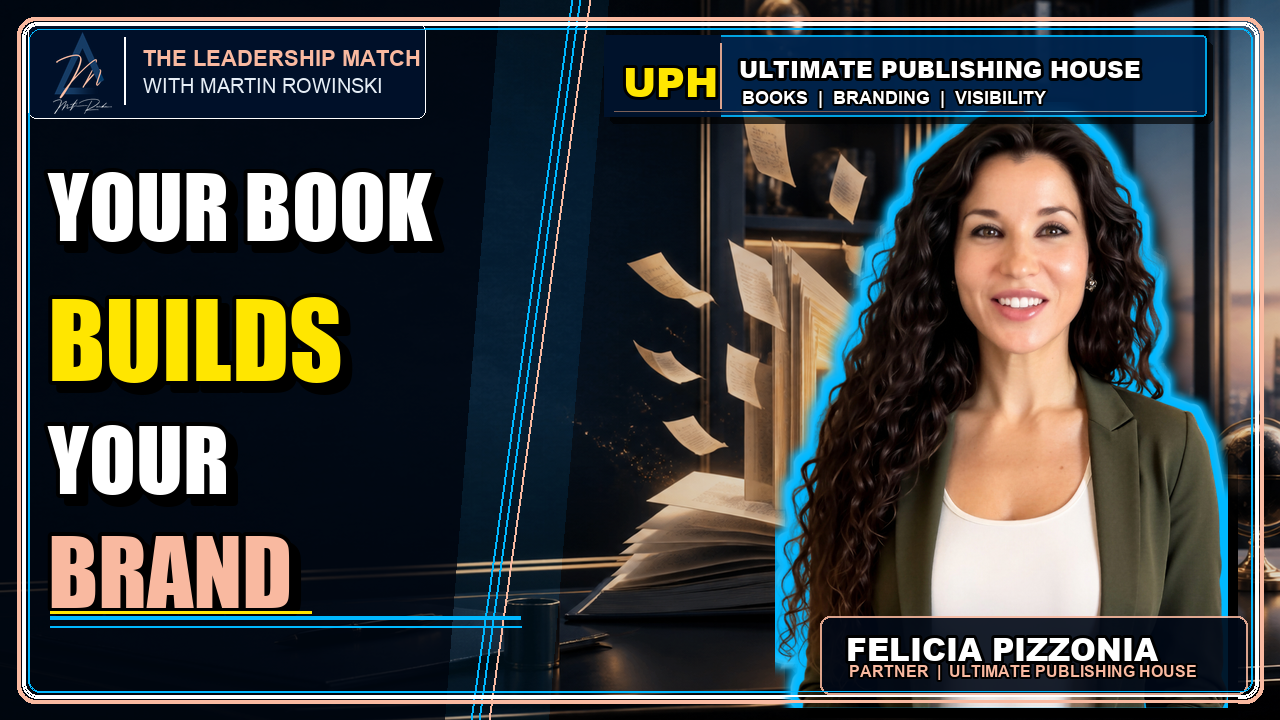
That was the heart of my conversation with Felicia Pizzonia on The Leadership Match.
Felicia is a partner at Ultimate Publishing House and a book publishing expert who helps entrepreneurs, doctors, executives, and thought leaders turn their ideas into books, intellectual property, branding assets, and global visibility.
What I appreciated about our conversation is that Felicia does not look at publishing as simply putting words on paper. She looks at it as positioning. She helps leaders clarify what they know, organize their expertise, and turn their experience into something that creates trust before they ever walk into a room.
That matters.
Because in today’s world, people research you before they meet you. They look at your website, your LinkedIn profile, your content, your interviews, your articles, your videos, and yes, whether you have taken the time to organize your thinking into a book.
A strong book can say something powerful about who you are and what you stand for.
A Book Is A Credibility Tool
Felicia said something that stayed with me: a book is portable proof of your thinking.
That is exactly right.
When someone writes a book the right way, they are not just sharing information. They are showing how they think. They are showing their process, their perspective, their experience, their values, and the transformation they can help others create.
That is powerful for executives, entrepreneurs, doctors, consultants, speakers, coaches, and business leaders.
Two people can have similar credentials, but the person who has organized their knowledge into a clear, compelling book often has a different level of authority. The book gives people something to hold, read, share, quote, and remember.
It helps you enter the room before you physically enter the room.
Branding Is More Than Logos And Colors
Felicia also made an important point about branding.
Branding is not just your logo, colors, fonts, or website. Those things matter, but they are not the whole brand.
Your brand is the emotional and intellectual impression people carry away after experiencing you.
What do they believe you understand?
What do they trust you to solve?
What do they remember about your story?
What value do they associate with your name?
A book gives that impression substance.
It takes what might be scattered across conversations, posts, interviews, and presentations and puts it into a structured message. It gives your brand depth and longevity.
That is especially important for leaders who want to move beyond the title. Your title may introduce you, but your thinking is what creates influence.
Start With Transformation
One of the biggest fears leaders have about writing a book is the blank page.
They think, “Where do I even start?”
Felicia’s approach is practical. A strong book does not need to include everything you know. In fact, it should not. The goal is not to empty your entire brain onto the page.
The goal is to create transformation for the reader.
What problem are you helping them solve?
What perspective are you helping them understand?
What journey are you taking them through?
What result should they be closer to when they finish the book?
That changes the process.
Instead of asking, “What should I write?” you start asking, “What does my reader need to experience, learn, believe, or do differently?”
That is how a book becomes useful.
Your Expertise Can Become Intellectual Property
This is where the conversation gets even more important for leaders.
The book is the container, but the intellectual property is the engine.
Inside a well-developed book, there may be frameworks, methods, language, stories, assessments, courses, coaching programs, keynote topics, workshops, media angles, and business opportunities.
A book can become the foundation for an entire ecosystem.
That is why leaders should not think only about book sales. Yes, selling books is great. But the larger opportunity is what the book can create.
It can lead to speaking engagements.
It can create media opportunities.
It can support consulting.
It can help build trust with clients.
It can open doors to partnerships.
It can strengthen executive branding.
It can become part of your legacy.
That is where a book becomes much more than pages.
Busy Leaders Can Still Write Books
Another point Felicia made is important for executives.
You do not have to disappear for months to write a book.
Many leaders already have the knowledge inside them. They have lived the experience. They have built companies, served clients, led teams, made mistakes, solved problems, and learned lessons that others need to hear.
The challenge is not always creating the wisdom. The challenge is extracting it, organizing it, and turning it into a manuscript.
That is why an interview-based process can be so valuable. Busy leaders can speak their ideas, tell their stories, answer the right questions, and allow a structured publishing team to help shape the material.
Your knowledge may already be there. It just needs to be organized.
Authentic Branding Begins With Lived Experience
Felicia’s action step was simple and powerful.
Record a 15-minute voice note and answer a few questions:
Who do I help?
What problem do I help solve?
What have I learned through years of experience that could shorten someone else’s learning curve?
That is a great place to start.
Do not overthink it. Do not try to sound perfect. Speak from experience. Speak as if you are advising one person who truly needs your help.
Then listen back.
You may hear phrases, stories, lessons, and ideas that are uniquely yours. That is where authentic branding begins. Not with a clever slogan, but with lived experience turned into value for someone else.
Final Thought
My conversation with Felicia Pizzonia was a reminder that leaders should not underestimate the power of their own knowledge.
You may have a story that can help someone.
You may have a framework that can create clarity.
You may have experience that can shorten another person’s learning curve.
You may have a message that belongs in a book.
A book is not just about becoming an author. It is about organizing your thinking, strengthening your brand, creating intellectual property, and building something that can continue opening doors long after the first conversation.
That is leadership beyond the title.
And for leaders who want to build credibility, visibility, and legacy, a book may be one of the most powerful tools they can create.
Watch or read Felicia Pizzonia’s full The Leadership Match profile here: https://www.youtube.com/watch?v=zAGG0LjjXT8
Check out Felicia Pizzonia’s Profile: https://theleadershipmatch.com/guest-profiles/felicia-pizzonia