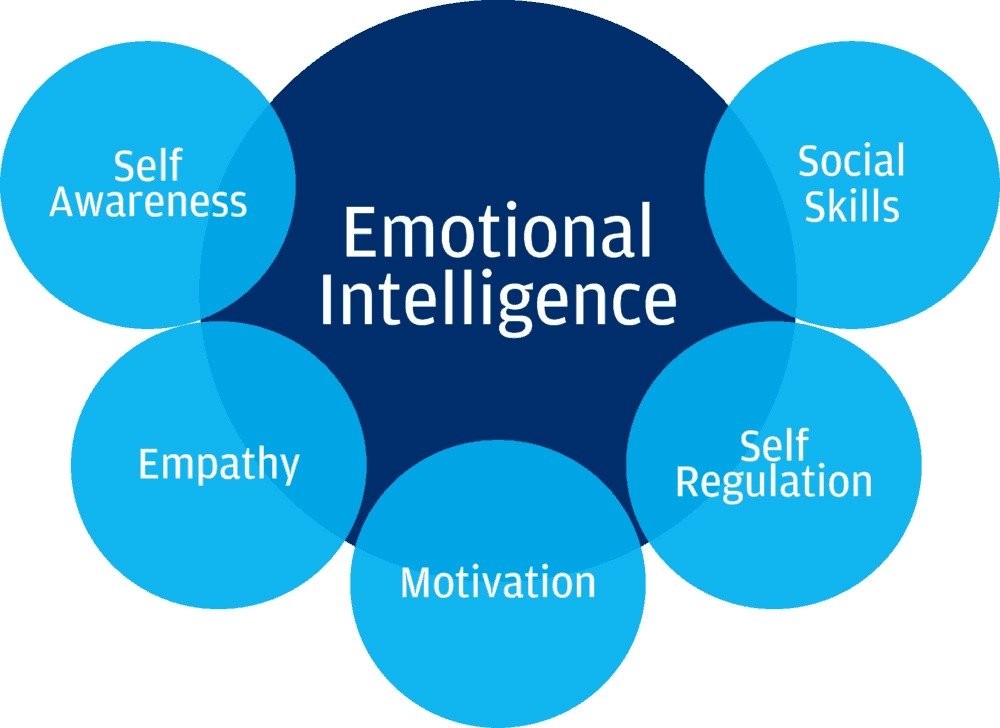
Emotional intelligence (EI) refers to the capacity to identify, comprehend, and regulate one’s own emotions, as well as the emotions of others. Effective leadership relies on the ability to navigate complex social interactions and establish strong relationships with team members.
Leaders that possess a high level of Emotional Intelligence (EI) are capable of establishing a deep emotional connection with their team members. They possess a keen comprehension of the emotions and motivations of their team members and employ this expertise to cultivate trust and promote a favorable work atmosphere. In addition, they possess the ability to regulate their own emotions and maintain composure in high-stress situations, enabling them to arrive at lucid and logical choices.
Leaders who possess a high level of emotional intelligence (EI) are also capable of effectively communicating with their team members. They employ efficacious communication skills, such as active listening and empathy, to cultivate robust relationships and foster a favorable work environment. In addition, they possess the ability to provide unambiguous and explicit feedback, so facilitating the enhancement and development of team members.
Leaders that possess a high level of emotional intelligence (EI) are adept at effectively settling disagreements. They possess the ability to comprehend diverse viewpoints and leverage this comprehension to identify shared interests and achieve mutually advantageous resolutions. In addition, they possess the ability to discern the appropriate moments to engage the assistance of individuals such as human resources personnel or external mediators in order to effectively address and settle problems.
Leaders who possess a high level of emotional intelligence (EI) also demonstrate a strong sense of self-awareness. They have a clear understanding of their own strengths and flaws and actively strive to improve upon them. They possess the capacity to comprehend the influence of their emotions and conduct on others and adapt their approach accordingly.
Ultimately, emotional intelligence is an essential element of successful leadership. Leaders that possess a high level of Emotional Intelligence (EI) have the ability to establish strong connections with their team members, effectively convey information, address issues, and serve as a role model. Leaders must prioritize the ongoing development of their emotional intelligence (EI) skills and cultivate self-awareness in order to enhance their effectiveness in their professions.
Here are eight strategies to improve Emotional Intelligence:
- Cultivate self-awareness: A crucial component of emotional intelligence is in the practice of self-awareness. Allocate a sufficient amount of time to introspect upon your ideas, emotions, and actions, and consider their influence on both yourself and those around you. This will enhance your comprehension of your own emotions and motivations, enabling you to create more proficient selections.
- Enhance your capacity for empathy: Empathy is the cognitive and emotional ability to comprehend and partake in the emotions experienced by another. Engage in active listening by attentively focusing on the speaker, pose thoughtful inquiries, and strive to comprehend the other individual’s point of view. By using this, you will enhance your ability to cultivate stronger interpersonal connections and foster a constructive professional atmosphere.
- Regulate and control your emotions: Acquire the skills to effectively regulate your own emotions and maintain a composed state of mind when faced with stressful situations. This will enable you to make lucid and logical decisions, even in challenging or highly stressful circumstances.
- Effective communication is crucial for establishing robust relationships and fostering a favorable work environment. Engage in active listening, provide explicit and straightforward comments, and employ empathy to comprehend the other individual’s viewpoint.
- Gain knowledge from failure: Failure is an unavoidable aspect of the process of cultivating emotional intelligence. Rather than becoming disheartened, utilize your mistakes as chances to acquire knowledge and enhance your abilities. Engage in introspection to analyze the factors that led to failure and consider other courses of action that could have been taken.
- Acquire knowledge: Emotional intelligence is an intricate and multifaceted term, and it is crucial to be well-informed. Engage in reading books, articles, or participating in workshops that focus on emotional intelligence and other relevant subjects.
- Solicit feedback: Consistently seek feedback on your emotional intelligence aptitude and genuinely consider constructive criticism. This will assist you in identifying areas that require work and monitoring your progress over a period of time.
- Engage in Mindfulness: Engaging in mindfulness activities such as meditation, yoga, and journaling can enhance your ability to remain fully present and conscious in the present moment. This, in turn, can enhance your emotional intelligence.
By employing these strategies, you can enhance your emotional intelligence and cultivate greater effectiveness as a leader. Keep in mind that emotional intelligence is an ongoing endeavor, and you should consistently seek opportunities to enhance and develop it.