
In the contemporary era characterized by rapid advancements and reliance on technology, leaders must possess a high level of proficiency in technology to achieve success. Being technologically proficient entails possessing a profound comprehension of technology and its use in accomplishing corporate objectives. Additionally, it implies having the capacity to proficiently navigate and utilize technological instruments.
Technology has become a fundamental component of numerous businesses, encompassing banking, healthcare, retail, and manufacturing. Consequently, leaders must possess knowledge of the most recent technology and trends to make well-informed judgments and maintain a competitive edge. In addition, it is essential for them to possess the capability to comprehend and effectively convey the intricate components of their enterprise to many stakeholders, such as employees, clients, and shareholders.
Being technologically proficient as a leader offers numerous advantages. As an illustration:
- Enhanced productivity: Leaders may enhance their organization’s efficiency and decrease expenses by leveraging technology to automate repetitive work and optimize processes.
- Enhanced communication: Technology can be utilized to streamline communication and collaboration among teams, thereby aiding leaders in maintaining connectivity and staying well-informed.
- Improved decision-making: By utilizing up-to-date data and advanced analytics, executives may make well-informed judgments grounded in factual information and evidence.
- Enhanced innovation: Through the adoption of emerging technology, leaders can stimulate creativity and generate fresh prospects for expansion.
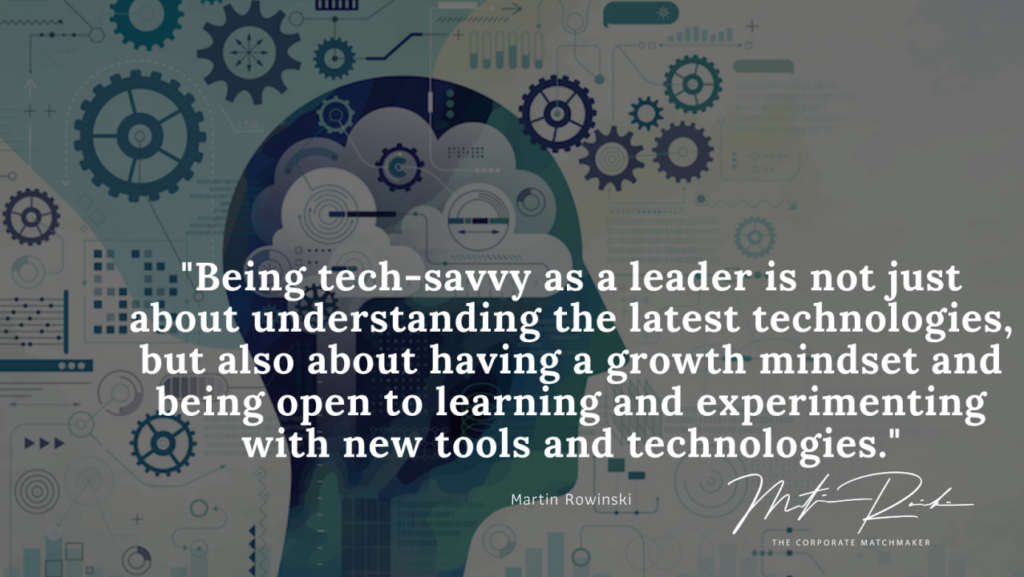
Being technologically proficient as a leader entails more than just comprehending the most recent advancements in technology. It also involves possessing a growth-oriented mindset and being receptive to acquiring knowledge and exploring novel tools and technologies. Leaders should demonstrate a willingness to engage in novel endeavors, embrace the possibility of errors, and actively seek to gain knowledge from those errors.
Ultimately, leaders must possess a high level of technological proficiency in the contemporary world that is heavily influenced by technology. This entails possessing a profound comprehension of technology and its potential for accomplishing corporate objectives, adeptly utilizing and maneuvering technological tools, and maintaining a growth-oriented attitude to continuously acquire knowledge and explore novel tools. Leaders can enhance organizational efficiency, communication, decision-making, and innovation by possessing technological expertise.