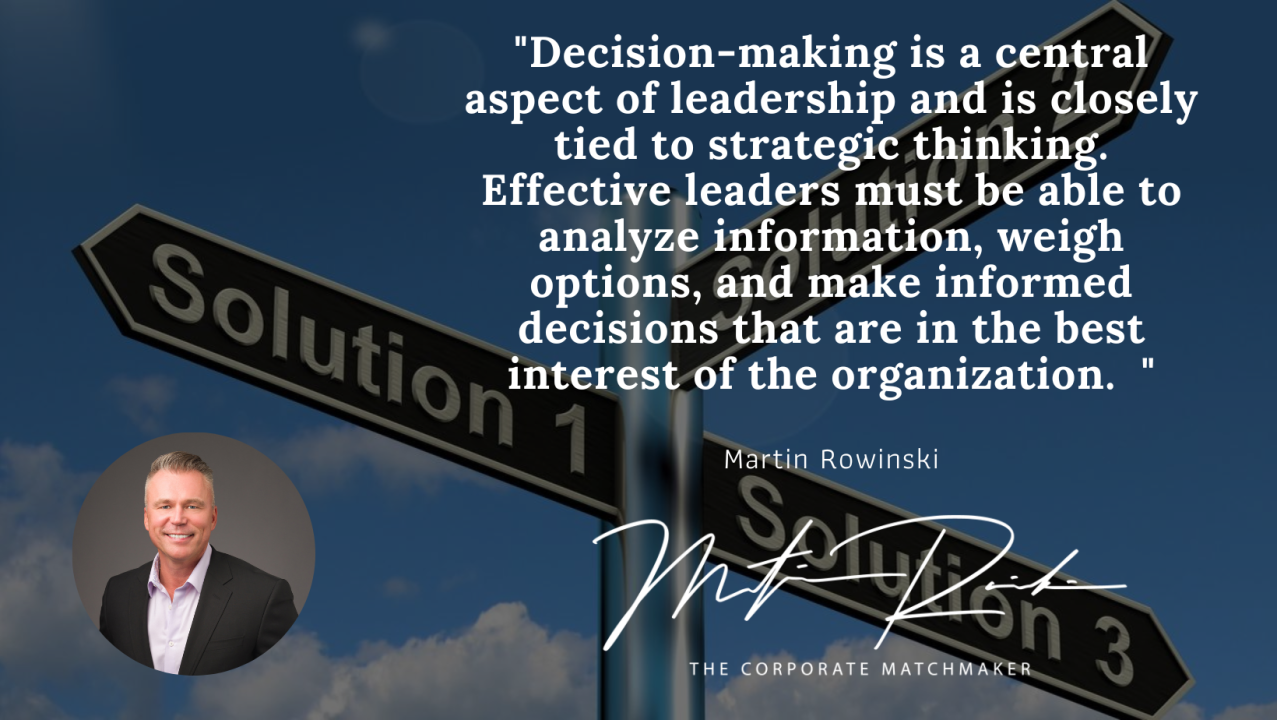
Decision-making is a fundamental element of leadership and is intricately linked to strategic thinking. Competent leaders must possess the ability to scrutinize data, evaluate alternatives, and render well-informed judgments that align with the organization’s best interests. This can entail the delicate task of reconciling conflicting priorities, such as the imperative to enhance profitability while simultaneously cutting expenses, and making required compromises.
Leaders must possess the ability to effectively convey their decisions and garner support for them from their teams and stakeholders. Effective and unambiguous communication may foster trust and support for the decision, which is crucial for its success.
Competent leaders also demonstrate the capacity to assign tasks and authorize their team members to make decisions. This not only enables the leaders to concentrate on more crucial responsibilities but also aids in developing a robust and competent team.
Leaders must consistently assess the efficacy of their decisions and derive knowledge from their experiences. The process of review and learning allows leaders to enhance their decision-making abilities gradually and become more proficient in their responsibilities.
 Leadership and decision-making are interconnected competencies that are vital for achieving success in any organization or business. Competent leaders must possess the ability to engage in strategic thinking, make well-informed judgments, communicate with efficacy, and consistently engage in learning and self-improvement. However, the process of decision-making can be intricate, and leaders may find it challenging to determine the optimal course of action. Leaders can enhance their decision-making skills using the following methods:
- Collect and analyze data: Competent leaders allocate sufficient time to collect and analyze pertinent data prior to reaching a decision. Examples of such data can encompass market research, customer feedback, and financial reporting. Leaders who possess a comprehensive comprehension of the situation are able to make more enlightened decisions that are more closely aligned with the organization’s aims and objectives.
- Take into account many alternatives: Effective leaders employ a multifaceted approach when making decisions, rather than relying solely on one choice. They evaluate the advantages and disadvantages of several possibilities and assess the probable consequences of each option on the organization.
- Promote solicitation of opinion from others: Leaders should not exclusively depend on their own perspectives when making choices. Solicit information and ideas from various sources, such as team members, stakeholders, and subject matter experts, in order to obtain a wide array of perspectives and potential solutions to the problem.
- Regulate emotions: The process of making decisions frequently entails the presence of emotions, such as apprehension around potential failure or the inclination for immediate outcomes. Competent leaders acquire the skill of regulating their emotions and refrain from making hasty decisions influenced by their emotional state.
- Be prepared to undertake calculated risks: The act of making a decision does not always include reducing risks; on occasion, taking a calculated risk might lead to the most favorable conclusion. Competent leaders possess the ability to recognize and assess potential hazards and make choices that are in line with the organization’s aims and objectives.
- Engage in a perpetual process of acquiring knowledge and enhancing one’s abilities. The decision-making process is continuous and ever-changing, strategies that were effective in the past may not be applicable in the present. Competent leaders consistently assess the efficacy of their choices and derive knowledge from their encounters, which aids in the enhancement of their decision-making aptitude over time.
 To summarize, decision-making is a crucial competency for leaders, and it is imperative that they make well-informed and strategic decisions that are in line with the aims and objectives of the business. Leaders may enhance their decision-making skills and improve their effectiveness in their roles by collecting and evaluating data, exploring many alternatives, soliciting advice from others, regulating their emotions, taking calculated risks, and consistently learning and refining their abilities.