
An Exploration of the Relationship Between Leadership and AQ
Leadership is a crucial element for achieving success in business and organizations. The competencies of a leader can exert a substantial influence on the productivity, morale, and overall success of their team. An often neglected facet of leadership is a leader’s AQ,.
AQ, also known as Adversity Quotient, pertains to an individual’s capacity to comprehend, control, and govern their own emotions, as well as the emotions of others. The concept incorporates a variety of emotional intelligence abilities, such as empathy, self-awareness, self-regulation, motivation, and social skills.
Leaders with a high AQ possess the ability to effectively handle intricate and demanding circumstances effortlessly, while also motivating their team to do the same. They possess the ability to comprehend and react to the emotions of their team, thereby fostering trust and cultivating a favorable work atmosphere. Furthermore, leaders that possess a high AQ have exceptional capability in managing stress and pressure, allowing them to excel even in the most challenging circumstances.
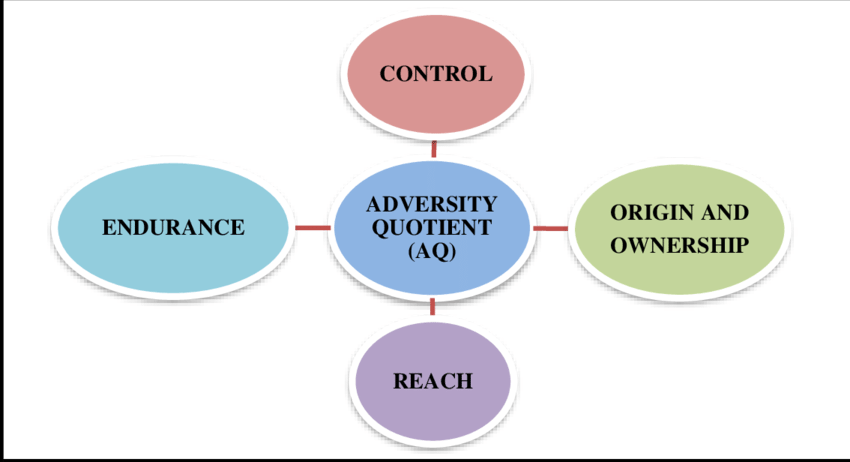
In order to enhance and refine your AQ (Adaptability Quotient) as a leader, it is crucial to concentrate on the following fundamental aspects:
Self-awareness: Leaders with a high level of emotional intelligence has the ability to identify and comprehend their own emotions, as well as the ways in which these emotions influence their actions. To enhance your emotional intelligence, allocate time for introspection to analyze your emotions and their impact on your interpersonal engagements.
Empathy: Leaders with a high level of emotional intelligence possess the ability to comprehend and effectively address the feelings of others. To enhance your AQ, endeavor to engage in active listening and comprehend the perspectives of others.
Self-regulation refers to the ability of leaders with high AQ to effectively control their emotions and react in a manner that is suitable for the given circumstances. In order to enhance your AQ, focus on cultivating your capacity to regulate your emotions and exercise restraint in challenging circumstances.
Motivation: Leaders possessing a high AQ demonstrate the ability to inspire and motivate both themselves and those around them. To enhance your AQ (Adversity Quotient), concentrate on cultivating your capacity to inspire and motivate individuals.
Social Skills: Leaders with a high AQ possess the ability to establish robust interpersonal connections and effectively engage in communication and collaboration with their team. In order to enhance your AQ, focus on cultivating your interpersonal skills and your capacity to establish meaningful connections with others.
Leaders that possess a high AQ (Adversity Quotient) frequently attain significant accomplishments, benefiting both their own growth and the performance of their team. By prioritizing the enhancement of your Adaptability Quotient (AQ), you may enhance your leadership skills and serve as a more efficient and motivating leader, so enabling your team to reach their maximum capabilities.