
A helpful leader is an individual who establishes a conducive atmosphere where individuals are esteemed, esteemed, and empowered to accomplish their objectives. This kind of leader prioritizes the welfare of their team members and is committed to assisting them in achieving success.
Several essential attributes of a leader who provides support include:
- Active listening: An effective leader have the ability to attentively listen and comprehend the issues and requirements of their team members.
- Empathy: They possess the ability to empathize with their team members by comprehending and appreciating their viewpoints.
- Encouragement: They offer positive reinforcement and constructive comments to their team members.
- Adaptability: They demonstrate a willingness to embrace novel concepts and methodologies, and are amenable to modifying their strategies in order to accommodate the requirements of their team.
- Effective communication: They possess the ability to articulate their expectations and objectives to their team in a clear and concise manner.
Having a supportive leader has numerous advantages. Team members experience heightened motivation and engagement when they perceive that their boss holds them in high regard and treats them with respect. Additionally, they are more prone to being efficient and exhibiting long-term commitment to the firm. Furthermore, a leader who provides support is capable of establishing a favorable and efficient work atmosphere, resulting in enhanced performance and increased success for the entire firm.
Ultimately, a helpful leader is a someone who demonstrates unwavering devotion to the welfare of their team members and is resolute in their determination to assist them in achieving success. They cultivate a constructive and efficient work atmosphere, setting a positive example by their display of empathy, adaptability, and effective communication.
An additional crucial element of being a helpful leader is offering continuous coaching to team members. An effective mentor is an individual who demonstrates a willingness to impart their expertise and wisdom to others, while also displaying a strong commitment to the advancement and progress of their mentee.
As a leader who offers assistance, you have the ability to provide mentorship through several means. As an illustration:
- Individual meetings: You have the option to arrange periodic one-on-one sessions with team members to review their advancement and offer comments and direction.
- Role modeling involves leading through example, by openly sharing personal experiences and showcasing the specific abilities and behaviors that you need your team members to imitate.
- Coaching involves assisting team members in recognizing their strengths and shortcomings, and equipping them with the necessary tools and resources to enhance their performance.
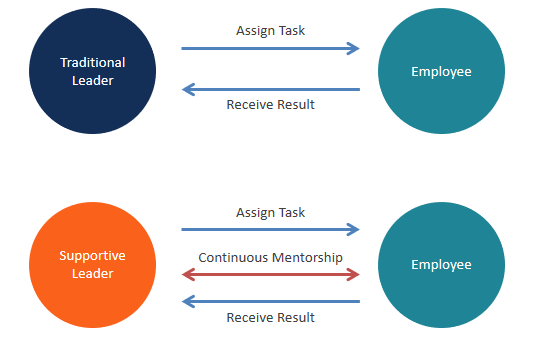
Mentorship is advantageous for both the leader and the members of the team. Mentoring offers leaders a chance to cultivate their leadership abilities and transmit their wisdom and expertise to the upcoming cohort of leaders. Mentorship may facilitate the growth of team members by equipping them with the necessary skills and information to progress in their careers and excel in their professions.
To summarize, a helpful leader offers continuous mentorship to their team members by the sharing of their knowledge and experience, serving as a role model, and providing coaching. This not only facilitates the growth and development of team members but also enables the leader to impart their knowledge and experience to the succeeding generation of leaders.